
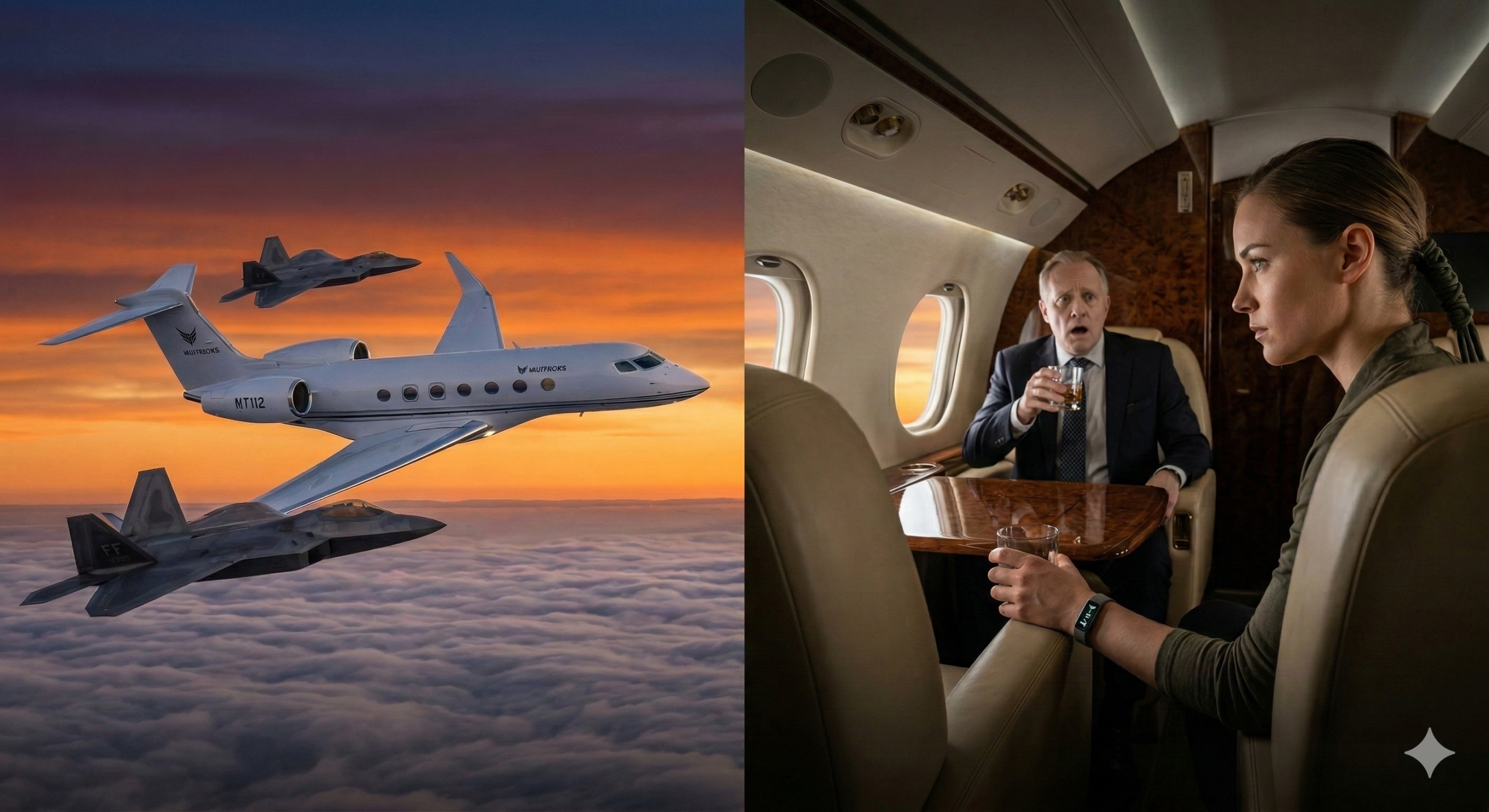
The champagne at the Davos-adjacent summit was significantly better than the swill Marcus used to serve, but the company was every bit as exhausting. I stood in the corner of the Grand Ballroom of the Hotel Schloss, clutching a tablet that was ostensibly for organizing the itineraries of the “Global Visionary” panel, listening to Julian Vance—a man who had inherited a tech conglomerate and possessed the personality of a damp sponge—explain the intricacies of global carbon credits to a captive audience of socialites.
I was Sarah Miller, the twenty-eight-year-old administrative assistant with chronic allergies and a penchant for sensible flats. For four years, I had been the invisible infrastructure of the Vance Corporation. I fixed the Wi-Fi when it crashed during board meetings, I managed the impossible logistics of transporting fifty CEOs to high-altitude retreats, and I smiled politely when Julian forgot my name or assumed I was a caterer.
I was so invisible, so utterly “background noise,” that I was effectively a part of the architecture. And that was exactly how the Agency liked it.
The shift in the room wasn’t audible. There was no explosion, no crash of glass. It was a subtle, chemical change—the scent of ozone, the sudden stillness of the two men in impeccable Italian suits standing by the service elevator who stopped laughing and started scanning the room with the practiced, predatory eyes of people who don’t belong at charity functions.
I felt it in my marrow. My fitness tracker—a cheap, bulky thing that actually housed a localized encrypted mesh network receiver—gave a sharp, double-vibrate against my wrist.
Protocol: Gray Sky. Threat: Tier 1.
My heart didn’t race. That was the training. My breathing slowed, my pupils dilated, and the room sharpened into a series of tactical vectors.
“Sarah!” Julian barked from across the room, oblivious to the fact that his head of security had just been neutralized in the hallway with a suppressed round. “My glass is empty. And get the slide deck for the Q&A session. We’re going to be late.”
I didn’t answer. I didn’t smile. I walked toward the service elevator, bypassing Julian, and shoved my shoulder into the heavy mahogany door of the coat check.
“Hey! That’s restricted!” a voice shouted behind me. It was one of Julian’s sycophants.
I didn’t look back. I jammed a small, unassuming keycard—the one that Julian thought was for the employee laundry—into the lock. The electronic mag-lock shrieked and disengaged. Inside the coat check, hidden behind a rack of mink furs and cashmere overcoats, was a nondescript Pelican case.
I emerged from the coat check forty seconds later. The transition was absolute. The messy bun was gone, my hair pulled back with a tactical cord; the sensible glasses were replaced by dark, impact-resistant lenses; and the tablet I held now displayed a live, satellite-linked schematic of the entire hotel.
The room had devolved into chaos. The two men in Italian suits had pulled submachine guns from inside their jackets, herding the wealthy guests into the center of the ballroom. Julian was on his knees, his face ashen, blubbering about his influence and his lawyers, completely useless.
“You!” one of the gunmen roared, spotting me as I stepped into the light. “Get on the ground!”
I didn’t drop. Instead, I tapped the screen of my tablet. A localized EMP burst, generated by the device I’d retrieved, pulsed through the room’s hidden speaker system—wired into the hotel’s grid. Every electronic light in the ballroom died.
In the sudden, absolute darkness, I wasn’t the assistant anymore. I was “Cipher.”
The silence that followed the blackout was broken by the sound of precise, rhythmic impacts. I didn’t need light to see; I had mapped the room’s geometry three days ago during the dry run. I moved through the dark with the economy of a ghost.
I disarmed the first gunman by the sound of his breathing. I took the second out with a sweep of his leg and a calculated strike to the carotid. It was efficient, brutal, and entirely over in six seconds.
I tapped my tablet, and the emergency power grid kicked in—not the hotel’s, but my own override. The chandeliers flickered back on.
The room froze. Fifty of the world’s most powerful people sat on the floor, mouths agape. Julian Vance was staring at me, his eyes wide, his hands still covering his head. He looked at the gun lying on the carpet near my feet, then back at me.
“Sarah?” he whispered.
“The name is Cipher, Julian,” I said, my voice cold, devoid of the polite subservience I’d worn like a uniform for four years. “And if you want to stay alive, you’re going to listen to me very carefully.”
I walked over to the main server rack, which I had known was the target of this ‘heist’ all along. I pulled a drive from the unit—a drive that contained the decrypted data on international human trafficking rings that Julian had been buying rather than reporting.
I looked at Julian, who was shaking uncontrollably. “I’ve spent four years watching you build an empire on corruption, assuming I was too stupid to understand what I was transcribing, too insignificant to notice the patterns. You thought I was your assistant. In reality, I was the cage.”
The hotel’s emergency security detail finally burst through the doors, weapons raised, but they lowered them instantly when they saw my face and the badge I held up. They didn’t see an assistant. They saw the authority that made their commanders nervous.
“The site is secure,” I said into my comms link. “Extraction for the asset is a no-go. Process the civilian suspects. I’m done with the cover.”
I turned to walk out.
“Wait!” Julian scrambled up, his expensive suit ruined, his authority evaporated. “What happens to me? You work for me! I pay your salary!”
I stopped at the threshold of the ballroom, looking back at the man who had treated me like furniture for half a decade.
“You paid for a file clerk, Julian,” I said, adjusting the strap of my tactical pack. “You got a clean-up crew. And as of sixty seconds ago, your company is under federal receivership. Consider it a severance package.”
I walked out of the ballroom, leaving the ‘visionaries’ to deal with the silence, stepping out into the cold Alpine air where a helicopter was already waiting to take me back to a life that—for the first time in four years—didn’t require me to pretend I was small.
“Have you ever been underestimated by someone, only to prove them wrong later? Drop a ‘💯’ if you believe you should respect everyone regardless of their status!”



One Comment on ““The Invisible Niece: Why F-22s Intercepted a Billionaire’s Private Jet.””