
The Disappeared
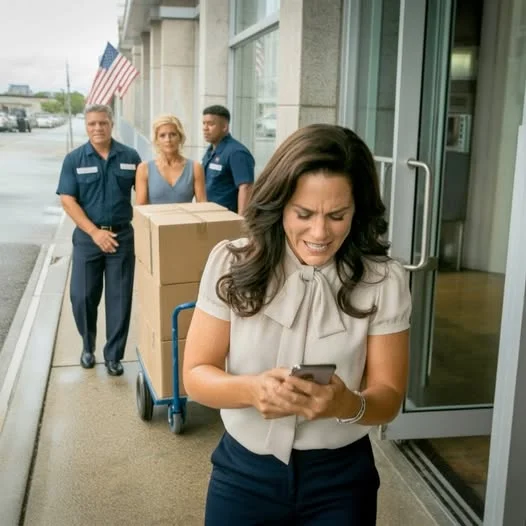
I knew something was wrong the second I stepped out of the rideshare and saw the movers. Three of them stood on the sidewalk in navy shirts, leaning casually against stacks of cardboard boxes—my boxes. I recognized the corner dents, the black tape, the thick marker ink.
My name was written across the top in my own handwriting: Lena Parker, the same slanted L I’d had since college. For a split second, my brain rejected the image—tried to rearrange it into something harmless. Maybe a neighbor was moving.
Maybe someone borrowed my Sharpie. Maybe this was the wrong building. But the address was right.
Meridian Heights. The sun was beating down on the back of my neck, my suitcase still standing upright beside me like I was just another traveler passing through. One of the movers glanced at his clipboard, then at me.
“Are you Lena Parker?” he asked, his tone light, almost friendly. When I nodded, he said the words that made the street go quiet around me. “We were told to clear the unit.
New owners take the keys today.”
The world tilted. New owners. My penthouse.
Before I could speak, my phone buzzed in my hand. A message from my sister flashed across the screen: Welcome home. Guess you’re homeless now.
I stood there on the sidewalk while people walked past, while my life sat in boxes behind strangers, and for the first time in years I didn’t know where I belonged. For a long moment I didn’t move. I just stared at the building, at the glass reflecting the afternoon sky, at the balcony where I used to drink my coffee and watch the harbor wake up.
I’d lived there for five years. Every inch of that space held my routines, my silence, my sense of control. And now I was being told, in broad daylight, that it was gone.
“There has to be a mistake,” I said finally, more to myself than to the mover. He shifted his weight, uncomfortable. “I’m sorry.
We just do what we’re told.”
I swallowed hard and stepped away, my hands shaking as I dialed my mother’s number. She answered on the second ring. “Did you land?” she asked, already irritated, as if my call was an interruption.
“Mom,” I said quietly, “why are my things on the sidewalk?”
There was a pause, then a sigh. “Don’t be dramatic, Lena. We did what we had to do.”
My chest tightened.
“Did what? We sold the apartment?”
She said it like she was talking about a piece of furniture. “Your sister needed help.”
“You sold my home,” I said.
The words sounded strange out loud. “Oh, please. You’re one person.
You travel all the time. You don’t need a penthouse.”
My father’s voice cut in on speaker, calm and firm. “This was for the good of the family.”
The good of the family.
I had heard that phrase my entire life. It had justified everything from unwanted advice to decisions made without me. “You didn’t even ask me,” I said.
“That’s because we knew you’d overreact,” my mother replied. “You always do.”
Before I could respond, another voice joined the call—bright, unmistakably amused. “So it’s true,” my sister Mara said.
“You really came back to nothing.”
“Mara,” I said, my jaw clenched. “Relax. You’ll figure it out.
You always do. And honestly, you should be thanking us. Josh and I were drowning.”
There it was.






2 Comments on “My Sister Sold My Penthouse Behind My Back—Then Asked Why I Was Smiling”