As her mother’s condition worsened, Sarah tried to hold together the little time they had left. Then a trembling confession about a daughter named Lucy exposed a secret her mother had carried for decades – and forced Sarah into a search that would change both their lives.
My mother asked me to find her daughter three days before she died.
Not me. Not the daughter sitting right there beside her hospital bed. Another daughter. One I had never heard of in my 32 years of being alive.
| At first, I thought the medication had finally started scrambling her mind. |
The doctors had already warned me that it could happen. Confusion, memory drift, and strange loops in thinking. So when Mom stared at me that evening with tears in her eyes and whispered, “Sarah… forgive me,” I assumed she was talking about dying.
I squeezed her hand and said, “There’s nothing to forgive.”
She looked like she wanted to say more, but the nurse came in to check her drip, and the moment passed.
The next afternoon, she asked me to open the drawer beside her bed.
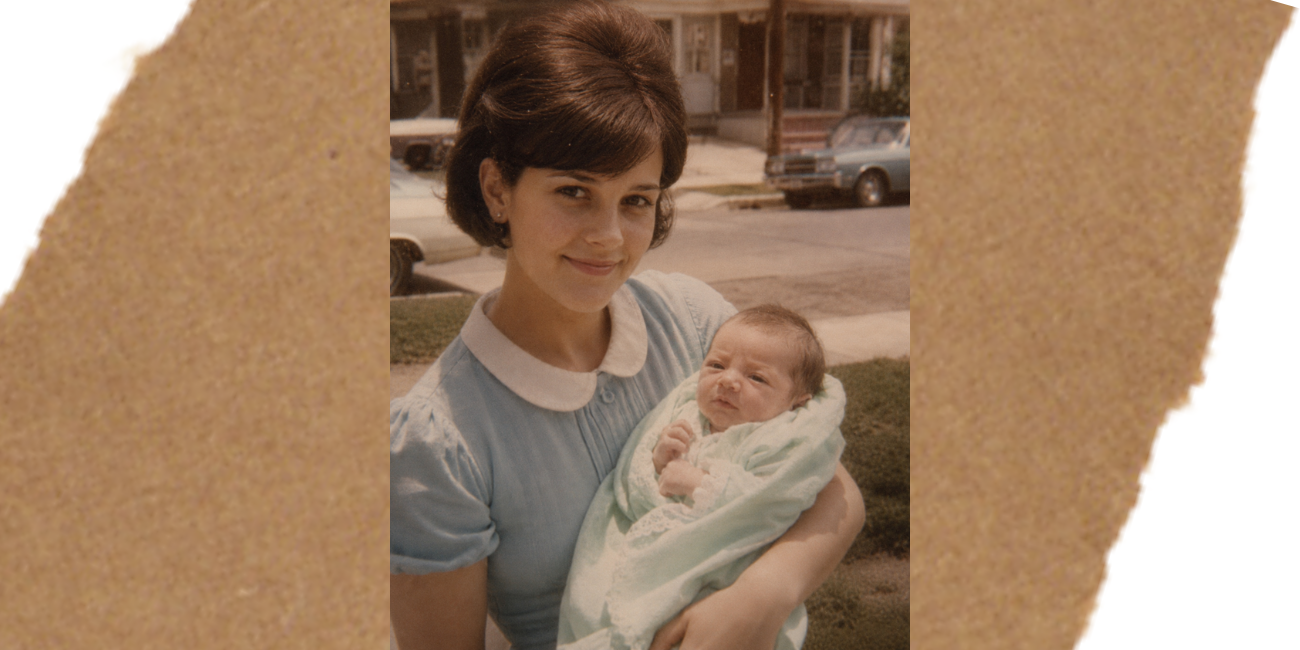
Instead, I found an old photograph. It was faded around the edges, the kind of picture that had lived inside wallets and boxes for years.
| In it, my mother was young. Very young. Maybe 19, maybe 20. |
Her hair was longer, her face thinner, and in her arms was a blond baby girl wearing a pale yellow romper.
The baby looked about five or six months old.
And she looked nothing like me.
“Mom?” I said.
Her mouth trembled.
“Find my daughter Lucy,” she whispered.
| I actually felt my body go cold. |
For a second, I just stared at her, waiting for her to correct herself. To laugh weakly and say she meant a cousin or an old friend or literally anything that made sense.
“Mom,” I said carefully, “I am your daughter. I’m right here.”
She slowly shook her head.
“No, Sarah. I’m not confused.” Her breathing turned shallow from the effort of speaking. “Please… find Lucy. Hurry. I want to see her at least one more time before I die. It’s my last wish.”
A thousand questions hit me at once.
| Who was Lucy? |
How could my mother have another child?
Why had she hidden this from me my whole life?
Did my father know?
Did anyone know?
But I looked at her lying there, skin papery and yellowed, her body already starting to slip away from her, and I could not do it. I could not interrogate a dying woman who was asking me for one last thing with fear in her eyes.
So I swallowed all of it and said, “Okay, Mom. I’ll find her.”
| She let out a shaky breath, like she’d been holding it in for decades. |
Then she closed her eyes and whispered, “Thank you.”
That night, I sat in the hospital parking lot in my car and cried so hard I made myself sick.
Not just because I was losing my mother. That pain had already been chewing through me for weeks. But because suddenly I did not know who she had really been.
When I was little, it was always just me and Mom. My dad died of a heart attack when I was six. Too young, too sudden, one of those stories that makes adults lower their voices.
After that, my mother became the kind of parent who worked too much, loved hard, and kept entire rooms inside herself locked shut.
| I used to think that was grief. Now I wondered what else it had been. |
The next morning, I brought the photograph back to the hospital and sat beside her bed.
“Tell me where to start,” I said.
Her eyes opened slowly.
She looked scared. Maybe because now the secret was real in the air between us and could not be taken back.
“I was young,” she whispered. “Stupid and alone.”
| I leaned closer so she would not have to strain. |
“It was before your father. Before everything.” Her fingers twitched against the blanket. “I got pregnant from a one-night stand. I barely knew his name. He disappeared. I had no family who would help me. No money. No way.” Tears slid into her hairline. “I gave her up.”
I closed my eyes for a second.
Not because I was judging her. I wasn’t. I was trying to absorb the fact that there had been another life before me, another baby in her arms, another impossible choice she had carried alone.
“Her adoptive family named her Lucy?” I asked.
Mom nodded faintly. “I got one letter. Through the agency. They said they kept the name, Lucy.” Her lips trembled. “I read that letter until the paper tore.”
| I swallowed hard. “Why didn’t you ever tell me?” |
She looked so ashamed that I hated myself the second the question came out.
“I wanted to,” she whispered. “So many times. But years passed. Then your father. Then you. And the longer I waited, the uglier it felt. I thought maybe I didn’t deserve to say her name out loud.”
The room went quiet except for the monitor beside her bed.
Finally, I asked, “Do you know where she is?”
She nodded toward her purse hanging on the chair.
| Inside was an envelope full of old documents. |
Agency paperwork and a name I didn’t recognize. A city two states over, and a handwritten note from years ago with a married last name and what looked like an outdated address.
She had kept every clue and tiny surviving thread to a daughter she had let go.
I spent the next two days turning into someone I barely recognized.
Adoption records were mostly sealed, which I learned very quickly and very painfully. Agencies had closed, and phone numbers were dead. Half the people I spoke to sounded sympathetic right up until they had to actually help.
I pieced things together through old public records, social media, property listings, one paid background search, and one retired social worker who finally took pity on me after hearing my mother had days left.
| That was how I found Lucy. |
She was 41 and lived in Columbus. She was married with two kids and was an elementary school teacher. Lucy was blonde, like the baby in the photograph, and smiling in every online picture like she belonged fully inside her life.
I stared at her family photo on my laptop in the hospital waiting room and felt something I could not name.
Jealousy, maybe.
Not because I wanted her life. Because she had existed the whole time, and I had not known.
I called her that afternoon.
| She answered on the fourth ring. |
“Hello?”
Her voice was warm, distracted, ordinary.
“Hi,” I said, suddenly unable to breathe. “Is this Lucy?”
“Yes?”
“My name is Sarah.” I gripped the phone harder. “This is going to sound strange, but I think… I think my mother is your birth mother.”
Silence.
A long, dead silence.
| Then she said, flatly, “No.” |
My heart lurched. “Please, just let me explain—”
“No.” Her voice sharpened. “I don’t know who gave you my number, but I don’t want contact.”
“My mom is dying.”
“I said no.”
“She has a few days left at most. She just wants to see you once.”
Lucy laughed once, but there was nothing amused in it.
| “Now? She wants to see me now?” |
I closed my eyes.
“I know this is unfair—”
“You know what’s unfair?” she snapped. “Being given away and then summoned like some unfinished errand four decades later.”
I had no answer to that because she was right.
She kept going, anger shaking now.
“My parents are my parents. The people who raised me, loved me, and showed up for me. Whoever gave birth to me had 41 years to decide I existed.”
| “She thought of you every day,” I said quietly. |
“That doesn’t change what she did.”
And again, she was right.
My throat tightened. “I understand why you’re angry.”
“No, you don’t.”
That hit harder than I expected, because of course I didn’t.
Then Lucy said, colder now, “Please don’t call me again.”
| And she hung up. |
When I told Mom, she turned her face toward the window.
For a long time, she did not say anything.
Then she whispered, “She should hate me.”
My chest hurt so badly I thought I might break in half.
“She doesn’t know you,” I said.
| Mom gave a weak, sad little smile. “That’s the whole tragedy.” |